Yoga, Body Images, and Social Media
Overview
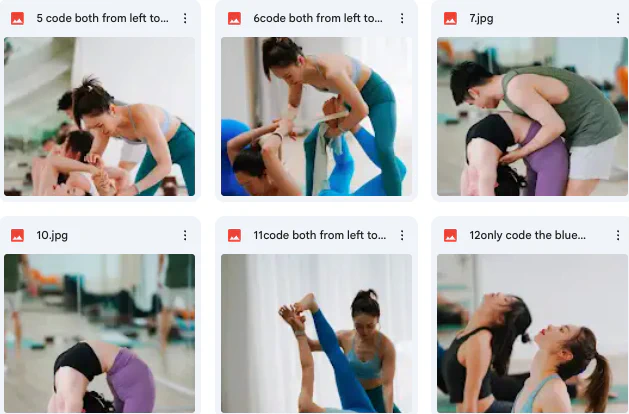
How does social media make an ideal of self-care appear both desirable and attainable? This project explores how images and narratives on Xiaohongshu construct women practicing yoga as self-care role models, connecting holistic wellness with expectations about bodies, gender, and class.
Approach
We combined quantitative content analysis of 3,586 images featuring 1,020 women with reflexive thematic analysis of textual narratives. Drawing on the motivational theory of role modeling and the self-care motivation model, we found out how these representations communicate both the desirability of yogic self-care and the possibility of achieving it.
Findings
The images presented a highly homogeneous role model: a thin, able-bodied, middle-class urban woman in her thirties.
The textual analysis developed four interconnected themes. Three made yogic self-care desirable through an idealized body, physical resilience and functionality, and spiritual growth connected to worldly fulfilment. The fourth made this ideal appear attainable through willpower and the cultivation of physical, cognitive, and emotional awareness.
These representations tied holistic wellness to a thin, youthful, upright, and controlled body. Our analysis suggests that commercial social media can frame self-care as a gendered and class-based performance of resilience, narrowing whose bodies and ways of living count as healthy.
Our findings motivate greater attention to algorithm literacy and fairness and inclusivity in platform design.
Manuscript
Title: An Attainable Blueprint for Holistic Wellness: Communicating the Self-Care Yogic Role Model on Social Media
Status: Accepted for presentation at the 112th National Communication Association Annual Convention (NCA 2026). Revised manuscript under review at Social Media + Society.
Access: For a copy of the manuscript, please email ytpeng@unc.edu.