Ordinary Tools, Organized Care
Overview
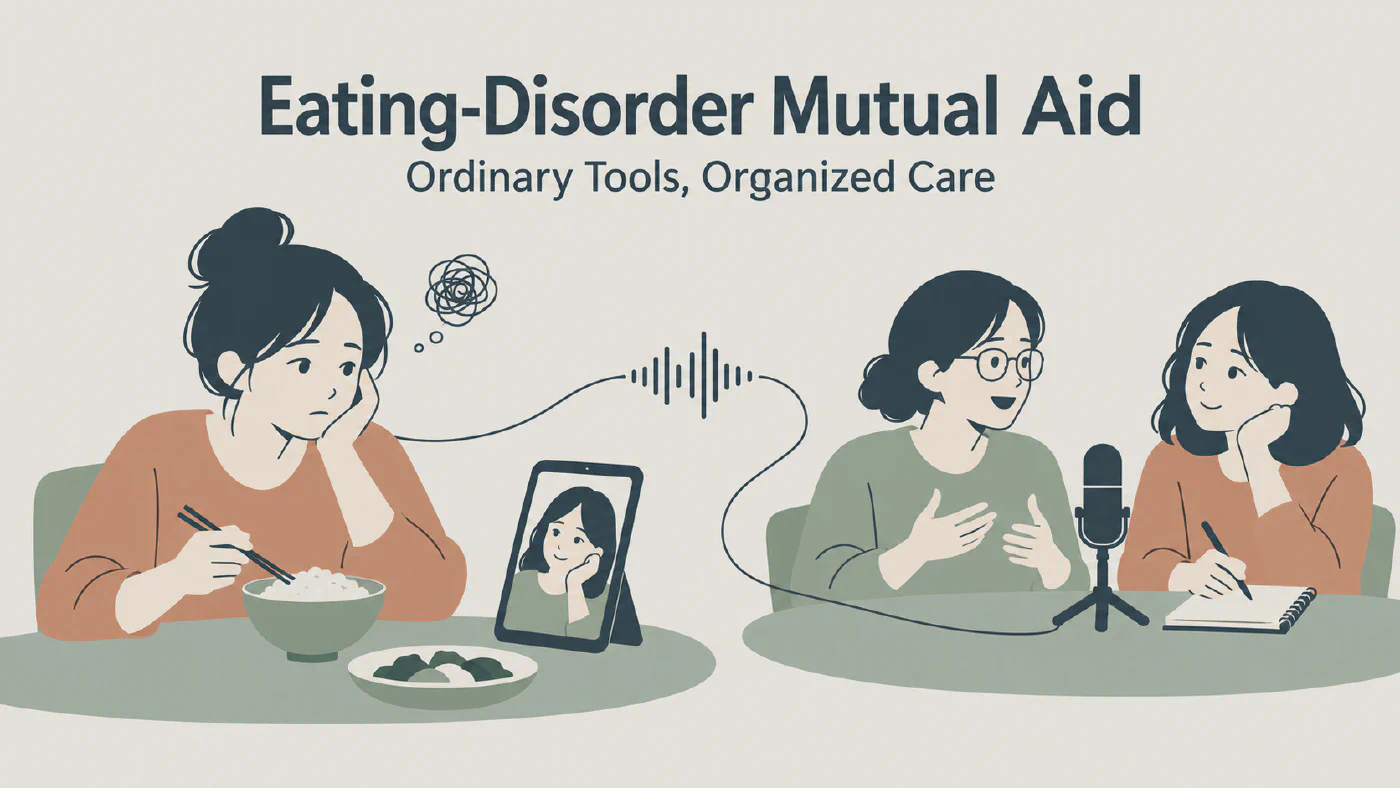
When people with eating disorders seek peer support, those providing it may also be working through their own recovery. This project examines how a Chinese mutual-aid organization uses everyday digital tools to arrange support while caring for its contributors. It asks how organizational practices can make room for giving and receiving care as members’ recovery needs change.
My role
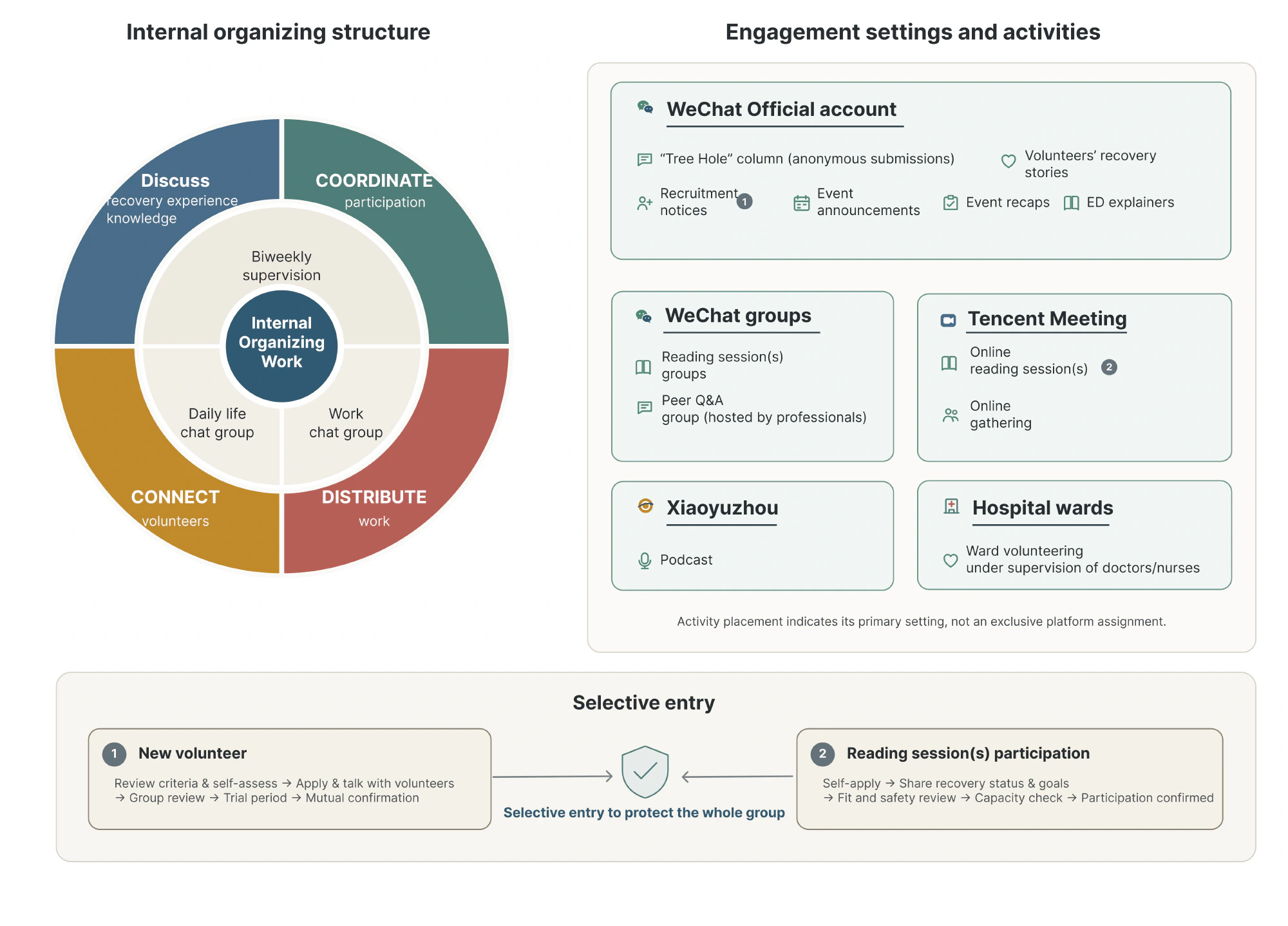
As first author, I led the qualitative analysis, translated the Chinese podcast transcripts into English, and developed an organization map with a cofounder of the group. I also contributed to the paper’s framing, writing, and revision in collaboration with the research team.
Approach
We used constructivist grounded theory to analyze six public podcast episodes featuring nine speakers. Initial and focused coding, constant comparison, and analytic memos helped us develop interpretations through ongoing team discussion. An organization map developed with a cofounder provided context about the group’s activities, platforms, and arrangements for participation.
Findings
Members often approached the organization after earlier support had fallen short. Public posts and podcasts offered ways to get to know the group before finding forms of participation that suited them.
Helping others did not mean setting aside their own need for care. Members could adjust commitments or step back to protect their recovery, while group supervision provided space to discuss difficulties in volunteer work and their own lives.
Reflecting together helped members reconsider their experiences and develop recovery knowledge for wider sharing. For some, contributing also brought a sense of value to their own recovery.
Manuscript
Title: Ordinary Tools, Organized Care: Bounded Mutuality in Eating-Disorder Mutual Aid
Status: Under review at CHI 2027.
Access: For a copy of the manuscript, please email ytpeng@unc.edu.